



Segregation at source
This is not something new; this is not something that only people in developed nation do. We i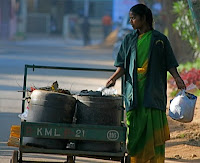 n India have practised it. In spite of the well intentioned move by the government to segregate the garbage and in spite of trying to educate the people, the meaning of biodegradable and non biodegradable, it is still remaining an unaccomplished task to have a considerable segregation of the garbage. The garbage collector of the corporation comes to our door steps with his vehicle having two distinct compartments for each. However in most cases the segregation is not done at the source, the house.
Just going back to my childhood days I remember how we used to collect all the plastics and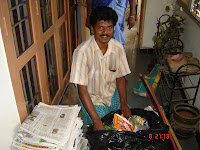 paper separately and sell it to the recycle vendor. I remember even washing of the milk sachet, which invariably makes the plastic easier to recycle, though it was done to recover the milk to the last drop.
The collection of plastic milk sachets, bottles and containers, though were not done with a concern for environment, rather more as a money tapping practise, was indeed a good practise. Papers of all sorts from newspapers to magazines and flyers were collected and sold to the recycle vendor. English newspapers are costlier than Tamil due to the quality difference – segregation at the source. As a need of the hour, due to the rising environmental calls, why not we follow it again.
If you are the one who is concerned about the environment, segregate the plastics at home and hand over to the recycle vendor.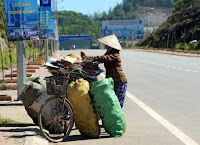
If you are a good engineer, how about designing a good vehicle and method for the recyclables collector who still now is coming in his old rusted cycle shouting out under the scorching sun? You can be one of the 3 Idiots.
I was quite moved, during a recent conversation, when I learnt from one such collector that both of his kids, a son and a daughter, were doing engineering.
 As heard from one of the analysts - in our present situation we have reached a point where it is difficult to imagine life without plastics, hence rather than planning to ban plastics, plan to effectively recycle it.
 n India have practised it. In spite of the well intentioned move by the government to segregate the garbage and in spite of trying to educate the people, the meaning of biodegradable and non biodegradable, it is still remaining an unaccomplished task to have a considerable segregation of the garbage. The garbage collector of the corporation comes to our door steps with his vehicle having two distinct compartments for each. However in most cases the segregation is not done at the source, the house.
Just going back to my childhood days I remember how we used to collect all the plastics and
 paper separately and sell it to the recycle vendor. I remember even washing of the milk sachet, which invariably makes the plastic easier to recycle, though it was done to recover the milk to the last drop.
The collection of plastic milk sachets, bottles and containers, though were not done with a concern for environment, rather more as a money tapping practise, was indeed a good practise. Papers of all sorts from newspapers to magazines and flyers were collected and sold to the recycle vendor. English newspapers are costlier than Tamil due to the quality difference – segregation at the source. As a need of the hour, due to the rising environmental calls, why not we follow it again.
If you are the one who is concerned about the environment, segregate the plastics at home and hand over to the recycle vendor.

If you are a good engineer, how about designing a good vehicle and method for the recyclables collector who still now is coming in his old rusted cycle shouting out under the scorching sun? You can be one of the 3 Idiots.
I was quite moved, during a recent conversation, when I learnt from one such collector that both of his kids, a son and a daughter, were doing engineering.
 As heard from one of the analysts - in our present situation we have reached a point where it is difficult to imagine life without plastics, hence rather than planning to ban plastics, plan to effectively recycle it.
-pics picked from other sites
Labels: CO2, environment, Plastic Recycle, segregation, Segregation at source
posted by Sivakumar | 10:19 AM
|
3 comments

